In 1977, Peter Liddle of Sunderland Polytechnic interviewed Brigadier J.A.C. Taylor, DSO, MC, about his First World War experiences.1
Taylor had embarked for war as a second lieutenant in the 10th Manchesters, East Lancashire (later 42nd) Division, the first Territorial division to go on foreign service. Taylor was aboard the transport HMT Avon which departed England for Egypt on 10 September 1914.

‘Now there is one thing that I must ask you to put on tape,’ said Mr Liddle, ‘and that is this splendid story of the warning by your commanding officer of the dangers that you young men might face in Egypt. Now what was this?’
‘Oh yes, that was a perfect scream,’ replied Taylor. ‘On parade, he was a real bluff old fellow and I remember the battalion was called to attention and he said, now then you young fellows. I must tell you we are in a land which is rife with buggery and you young fellows must be damn careful what you are about when you go out in the place or before you know what will happen, you will be buggered.’
The commanding officer of the 1/10th Manchesters was Lieutenant Colonel John Buckley Rye, VD, who was with the unit for 42 years in peace and war. It was the 6th Volunteer Battalion Manchester Regiment when he joined it in 1886 as a subaltern. Colonel Rye had the honour of taking the battalion out on active service, as commanding officer, when it was despatched to Egypt in September 1914. In the following spring, the battalion was in action at Gallipoli, and later went to France, but Colonel Rye was taken ill on the Peninsula and invalided home in late June 1915. In his younger days, Colonel Rye was a stalwart of the Oldham Rugby Union Football Club, and played for the county on several occasions. He also played for Oldham Cricket Club. He was proprietor of Taylor and Rye, yarn agents.
Brigadier John Alexander Chisholm Taylor, DSO, MC, born 3 November 1890, was an architect from Oldham. He left England in 1914 as a subaltern in the 1/10th Manchesters, was a company commander in June 1915 at Gallipoli, served with distinction throughout the war and commanded the battalion after the Armistice. He was mentioned in despatches and awarded the DSO and MC with two bars. In 1948, Taylor was an honorary colonel in the Royal Artillery.
What Egypt was really like
Colonel Rye’s earnest warning reveals more about Edwardian anxieties than the actual dangers facing his young soldiers. The reality for the rank-and-file was less moral peril, more heat, dust, and discovery.

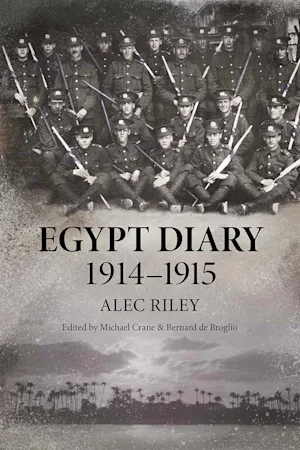
Signaller Alec Riley records this culture shock in Egypt Diary 1914–1915. Mobilizing with the 6th Manchesters, Riley offers a ground-level view of young men encountering a landscape utterly removed from their experiences in Northern England. Riley’s dry humour brings to life the daily absurdities of garrison duty, from navigating interactions with local Egyptians to the serious business of defending beer supplies from light-fingered Australian troops.
Alec Riley’s First World War diaries span his complete war service: from Egypt, through the hell of Gallipoli, to his convalescence in a great Victorian military hospital.
‘TAYLOR, J A CHISHOLM’, Liddle Collection, University of Leeds, LIDDLE/WWI/GS/1583.
↩
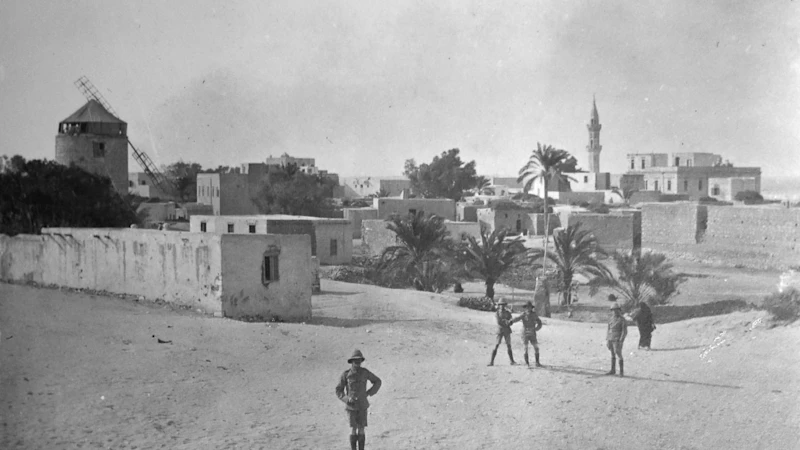
Banner image: Men of the Manchester Regiment explore a village near Sidi Gaber, Alexandria, 1914. From an album compiled by an unnamed soldier in the 6th Manchesters. Tameside Local Studies and Archives Centre, Manchester Regiment Archive, MR4/23/102.